

It started with a simple idea: The story of the Orange Whip
Golf has always been a lifelong passion for me, a source of challenge, growth, and ultimately, innovation. I started playing golf when I was 13 years old. I was introduced to the game by some kids in my neighborhood, and I still remember those first days out on a 9-hole public course in North Dakota. We were a group of beginners, relying on each other to figure things out. None of us had formal lessons or fancy equipment, but we loved every minute of the challenge. The challenge, the camaraderie, and the awesome feeling of striking a golf ball well captivated me.
As my interest in golf grew, so did my skills. I was fortunate to land a job in the bag room at the local country club. For a teen with a passion for golf, this was an incredible opportunity. I was surrounded by golfers of all ages and abilities; their stories and advice fueled my desire to learn more. It was here that my love for the game truly grew. The country club became a second home, a place where I could immerse myself in golf culture and soak up the knowledge from every round, every conversation, and every swing.
High school golf in North Dakota provided the perfect stage for my improving golf game. I poured my energy into improving, competing, and setting my sights on an even bigger goal: playing college golf.
College golf years
After graduating high school, I made a bold move to Arizona to further pursue this dream. For two years, I dedicated myself to practicing and improving my game, often playing from sunup to sundown. My hard work paid off in the fall of 1988 when I earned a spot on the Arizona State University golf team as the only walk-on qualifier that year. As luck would have it, I joined the team alongside Phil Mickelson, one of the biggest blue-chip recruits in ASU history. Competing with and learning from such high-caliber players was a true gift.
My collegiate golf journey took a new direction as I decided to continue my college career at Oregon State University. The Pacific Northwest had a significant influence on my game both on and off the course.
Pro golfer to golf professional
After college, I decided to turn pro and try to make it to the PGA Tour. The life of a pro golfer is not for the faint of heart. While I didn’t achieve the level of success I’d hoped for, those years were invaluable. I learned not only about competing under pressure but also about the intricacies of the golf swing and the mental toughness required to succeed.
After my stint as a professional, I began to channel my passion for golf into teaching. I became a golf instructor and was excited to help others improve their golf game. In the beginning, I was very technical in my approach—focusing on swing positions, mechanics, and detailed swing analysis. I wanted to give my students every tool I thought they needed. However, I soon realized that this highly technical approach sometimes left my students confused and frustrated. Progress was slower than I hoped, and I began to question my methods.
PGA Tour caddie
Everything changed when my good friend from junior golf, Patrick Moore, made it to the PGA Tour and asked me to caddie for him in 2003. Patrick was an All-American at the University of North Carolina, and I felt honored to be asked to help him out on tour. Those years on tour were a game-changer for me. I spent hours watching the best players in the world practice and compete, soaking in every detail. What stood out to me was how fluid and effortless their swings appeared. They made it look easy and athletic, rather than robotic and overly technical.
I became obsessed with understanding why these elite golfers swung so naturally, while so many amateurs (myself included at times) struggled with complexity and tension. During long evenings on the road, I’d reflect on what I’d seen and experiment with my own swing, sometimes swinging clubs in hotel rooms late into the night. Over time, I realized that the golf swing shouldn’t be a series of forced positions. It's about learning the proper grip and setup and then swinging the club as if it were a ball on the end of a chain. This approach emphasizes rhythm, balance, and a natural motion—elements that seemed to come effortlessly to the pros.
The Orange Whip philosophy
I was excited about this newfound philosophy, and I began to incorporate it into my teaching. Some students immediately understood what I was describing, but many struggled to “feel” the difference. I needed a way to create that sensation for them—a tool they could swing and experience the feeling for themselves. My first attempts to develop a golf training aid were rudimentary: I tried using a chain and a weighted ball but quickly realized it wasn’t safe to swing past a certain point. Then I had an idea—I grabbed a fishing rod and started experimenting with adding weights. I discovered that when I balanced the weight on both ends, the device created a smooth, on-plane swing sensation.
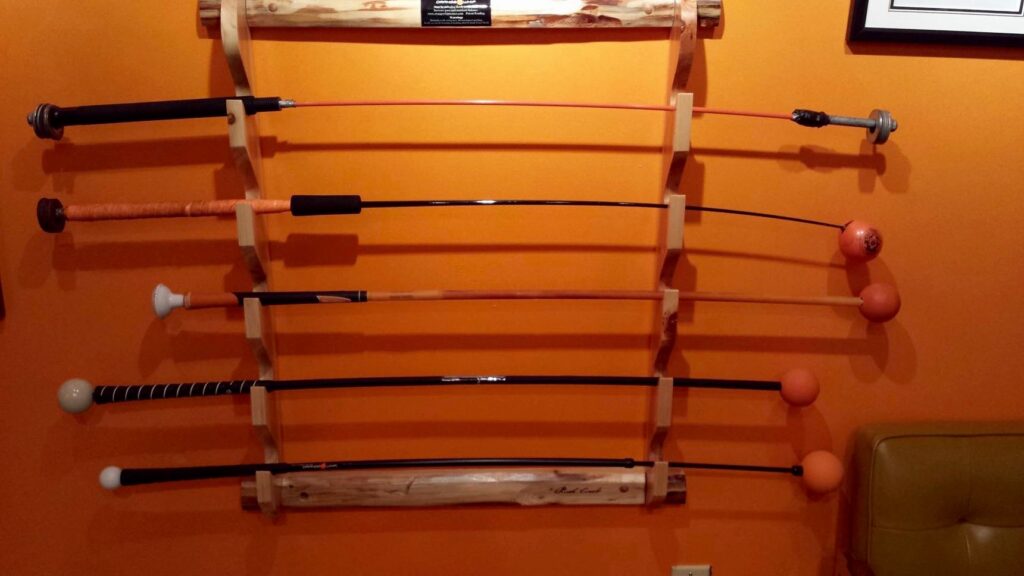
This prototype, which would eventually become the Orange Whip Trainer, was an immediate hit with my students. They loved the way it helped them warm up, improve their rhythm, and achieve balance in their swings. Many asked, “Jimmy, can I buy one of these?”, and I began to realize I might have stumbled upon something special.
In November 2007, with the encouragement of some supportive members from the clubs where I taught—and with their financial backing—I moved to Easley, South Carolina. I chose Easley for its proximity to a large population of golfers and began building the first Orange Whips by hand in my garage. The early days were filled with challenges: sourcing parts, refining the design, and learning the ins and outs of safe, reliable manufacturing, but through perseverance and feedback, the Orange Whip evolved. In 2008, I was ready to introduce it to the world at the PGA Show in Orlando.
That first PGA Show was nerve-wracking, but the response was more than I’d hoped for. PGA professionals embraced the Orange Whip and recognized its potential to help their students develop rhythm, balance, and a better swing. Word spread, and soon I found myself traveling across the country, demoing the Orange Whip to instructors and players everywhere. We grew year after year, focusing on our manufacturing process to meet demand and maintain the highest quality. I’m proud to say the Orange Whip is Made In The USA.
Like many businesses, we faced uncertainty when the COVID-19 pandemic hit. But golf proved to be one of the few activities people could safely enjoy, and interest in the Orange Whip exploded. This period solidified our reputation as a must-have tool for golfers of all levels, helping players swing better, more powerfully, and with greater confidence.
Looking back over the past 18 years, I’m filled with gratitude for the early investors who supported my vision, the loyal staff who have become like family, the PGA and LPGA professionals who believed in our product, and the thousands of golfers who continue to use and recommend the Orange Whip. My mission remains to share the importance of rhythm and balance in golf, helping as many players as possible enjoy the game and reach their full potential.
If you haven’t tried the Orange Whip yet, I invite you to experience the difference for yourself. Whether you’re a beginner or a seasoned pro, the right rhythm and balance can transform your swing—and your enjoyment of the game.
Thank you for being part of this incredible journey!
~ Jim Hackenberg, PGA
CEO and Founder of Orange Whip Golf & Fitness


